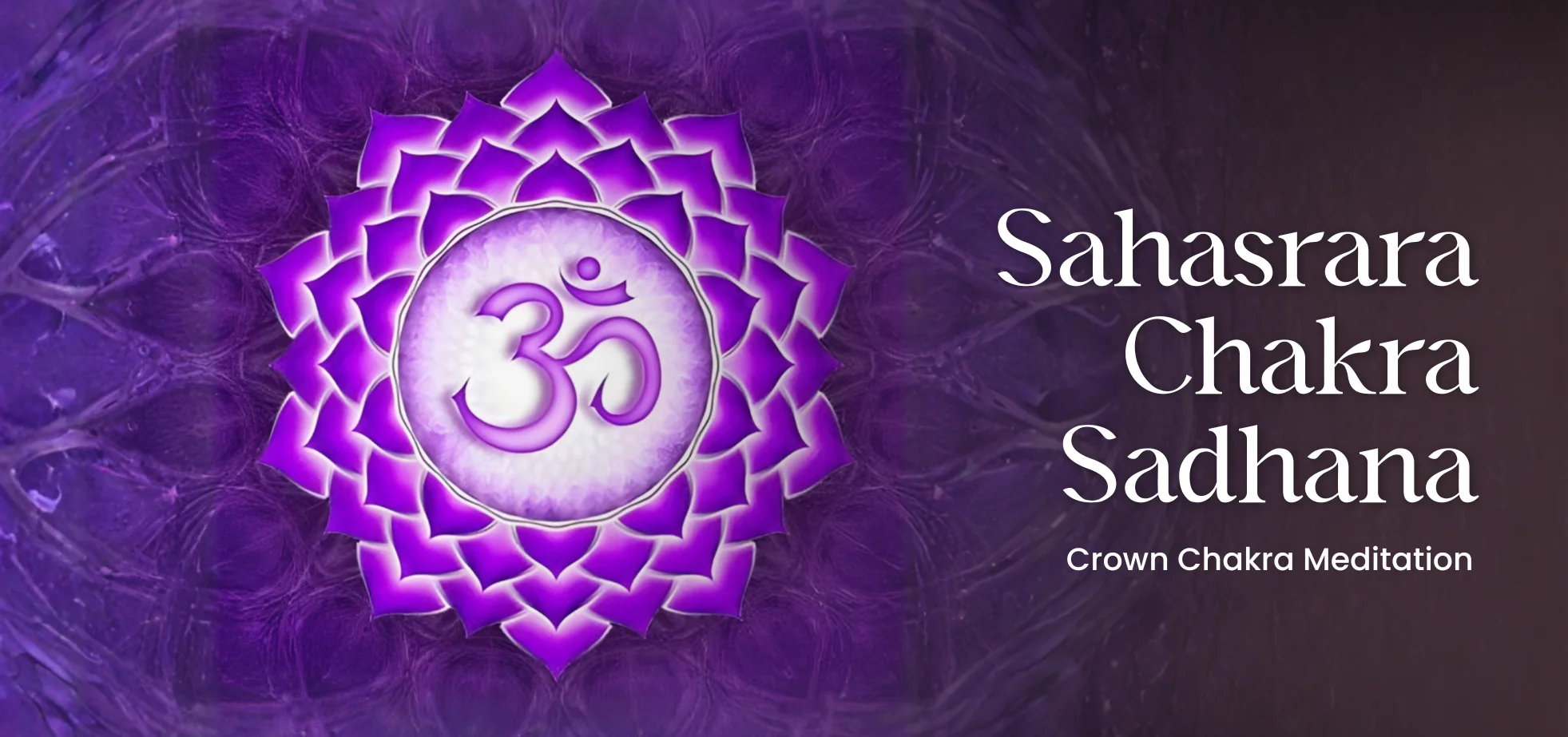
“Sahasrara” in Sanskrit means “thousand,” reflecting the lotus petals that represent various aspects of our being, including thoughts, emotions, and actions. Reckoned as the highest energy center and located at the top of the head, it represents pure consciousness, divine light, and oneness with existence. Its color is violet or white—symbols of purity, awareness, and enlightenment. It governs the pituitary, hypothalamus, and pineal glands, influencing sleep, mood, energy levels, and spiritual experiences. Sahasrāra radiates Medhā Shakti—the spiritual energy that sharpens memory, awareness, and intuition. However, if this chakra is blocked, it causes confusion, depression, disconnection from self, insomnia, headaches, or heightened sensitivity.
When this chakra is not open, the energy from the lower chakras cannot rise up. Instead of feeling peaceful or wise, a person may feel confused, dull, or disconnected from themselves. The state of bliss feels far away, and the inner Shakti cannot reach the crown. If the heart (Anāhata) is also closed, it becomes even harder to feel love or trust, which blocks the process even more.
Sahasrāra also becomes weak when stress, worry, or negative thoughts take over. Memory, clarity, and intuition feel low. Meditation may feel difficult and life may feel unclear, heavy, or spiritually dry, as if something inside is unable to open. This is where guided Gratitude Meditation truly becomes a turning point. Ancient texts, from the Vedas to the Upanishads, emphasize that gratitude purifies the mind, strengthens devotion (bhakti), and aligns our actions (karma) with cosmic order.